
Fayette County Arrest Records and Charges
Fayette County arrest records start with law enforcement. The Fayette County Sheriff's Office, municipal police departments, Tennessee Highway Patrol, or another agency may make an arrest and book the person into the Fayette County Detention Center at 705 Justice Drive. The public inmate roster can show current custody, arrest date, held-for agency, cell block, release date, and a charges block for current inmates. It is not a full historical arrest-record database.
Court charge records begin when the case reaches court. The charge may come through an affidavit of complaint, an information, an indictment, or a presentment. The 25th Judicial District Attorney General, Mark E. Davidson, prosecutes state criminal cases. The Circuit Court Clerk keeps the Fayette County charge and criminal case file for General Sessions and Circuit Court. For the full case record, disposition, and sentence, use Fayette County criminal court records.
This distinction protects against a common mistake. A booking label can be an early hold reason, while the court charge can be narrowed, replaced, dismissed, or expanded after prosecutor review. The court charge record is the better source for the formal accusation. The final judgment is the better source for the outcome.
Fayette County charge records can also cross office lines. A sheriff arrest, a municipal police arrest, a Tennessee Highway Patrol citation, or a state task-force case may all lead to a court entry, but the court that receives the charge depends on the offense, location, and procedure. General Sessions handles many first settings, misdemeanors, and preliminary felony hearings. Circuit Court receives felony indictments and bound-over matters. Municipal courts handle city ordinance and city traffic matters.
| Record | Main Source | What It Tells You |
|---|---|---|
| Arrest or booking record | Fayette County Sheriff's Office or arresting agency | Custody, booking date, held-for agency, current hold reason, release status |
| Charge record | Circuit Court Clerk or municipal court clerk | Complaint, indictment, charge code, status, court date, bond, disposition |
| State offender record | TDOC FOIL for sentenced felony offenders | State custody, sentence, offense, status, parole, release information |
Find Fayette County Arrest Records
Current custody information is searched through the Fayette County Zuercher portal linked from the Sheriff's Office jail page. The portal is for current inmates and does not guarantee a complete record of prior arrests. If no current inmate appears, the person may have been released, housed externally, transferred, cited without custody, or never booked into the local jail. For incident reports or historical arrest records, contact the FCSO Records and Warrants Division under Tennessee public-records rules.
- Search the current inmate roster for the person's name, race, sex, arrest date, held-for agency, or release date.
- Read the charge block carefully, including charge description, statute, bond amount, and court when shown.
- Call Booking or FCSO if the custody status, bond, or held-for agency needs verification.
- Contact the Circuit Court Clerk for the court charge record and case status.
- Use a TPRA request to the correct custodian when a report, docket, or copy is not available by simple phone inquiry.
The TDOC Felony Offender Information Lookup is a statewide offender search, not a Fayette County arrest-record database.
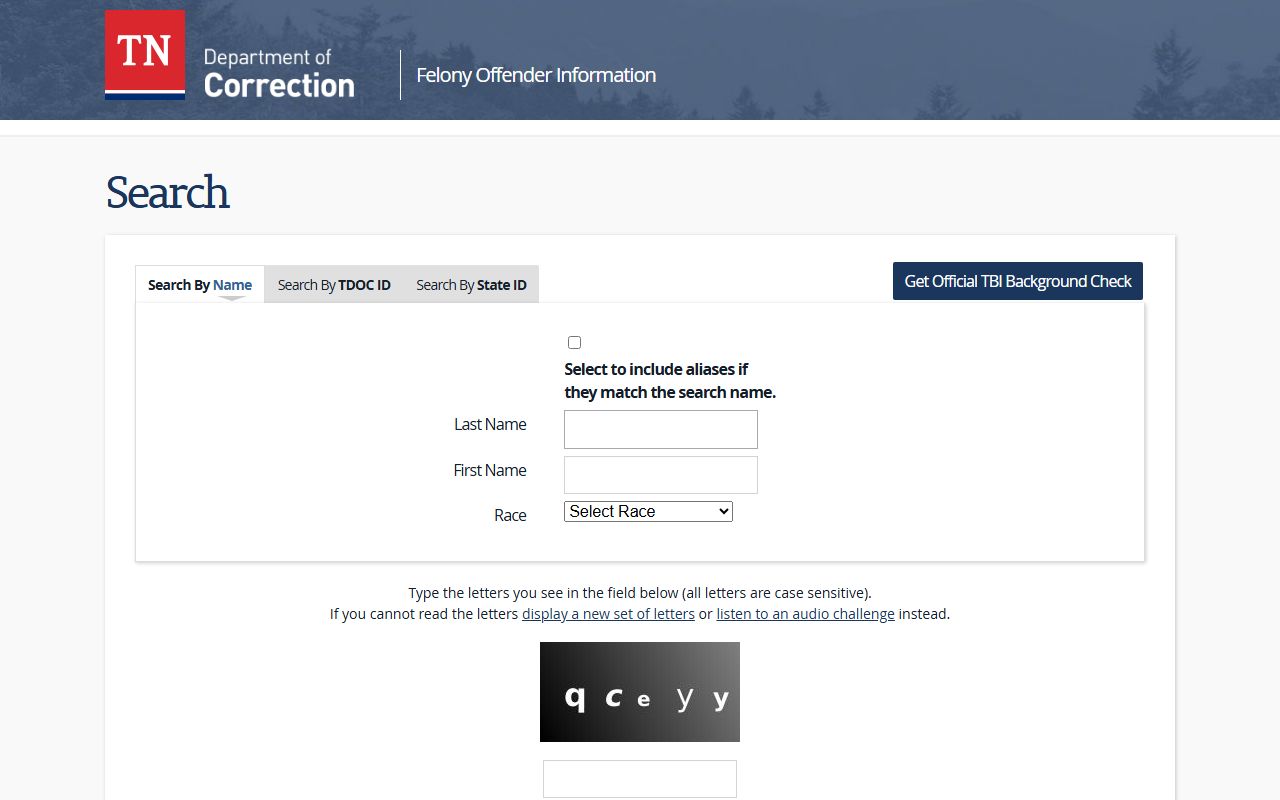
Use FOIL after a felony sentence reaches state custody, not to confirm every local arrest or pending county charge.
Charges After Arrest Documents
Charges after arrest are recorded through charging documents. In Fayette County, a misdemeanor may begin in General Sessions through an affidavit of complaint or citation. A felony may start with an arrest warrant and preliminary hearing, then move to the Circuit Court grand jury for indictment. Tennessee also recognizes a presentment, a grand-jury charging instrument issued on the grand jury's own initiative. Each count should be read separately because one arrest can create several charge paths.
| Document | Who Uses It | Typical Fayette County Use |
|---|---|---|
| Complaint or affidavit of complaint | Officer or prosecutor | Starts many General Sessions criminal cases and supports warrants. |
| Information | Prosecutor | Formal charge by the State when allowed by procedure. |
| Indictment | Grand jury | Formal felony charge for Circuit Court prosecution. |
| Presentment | Grand jury | Tennessee grand-jury charge issued without the usual prosecutor-filed indictment path. |
Fayette County Charge Status
Charge status can change while a Fayette County criminal case moves through court. A charge may be pending after arrest, amended by agreement or order, reduced in plea negotiations, dismissed after a hearing, retired, nolle prosequied by the prosecutor, sent to the grand jury, or resolved by conviction or acquittal. The final disposition, not the original arrest label, controls how the court record should be read.
Read each count separately. A single arrest for a traffic stop, domestic call, warrant service, or investigation can produce several charges. Some may stay in General Sessions. Others may be bound over to Circuit Court. A bond amount may attach to the whole case or to a particular hold, and later docket activity may change the public meaning of the original charge text.
| Status | What It Means |
|---|---|
| Pending | The court has not entered a final result on the count. |
| Amended or reduced | The charge changed from the original wording, statute, count, or severity. |
| Dismissed | The count ended without conviction, sometimes with costs to resolve first. |
| Nolle prosequi | The prosecutor formally declined to continue that charge. |
| No true bill | The grand jury did not return an indictment on that charge. |
| Guilty or convicted | The count ended in a guilty plea, verdict, or judgment of guilt. |
Charge vs Conviction
An arrest record or charge record is not proof of conviction. The Fayette County inmate roster notice states that an arrest does not mean the person has been convicted. Court records should be read count by count. A person can be arrested on several charges, have one dismissed, have one reduced, plead to one lesser offense, and have another bound over or retired.
| Point | Charge | Conviction |
|---|---|---|
| Legal Meaning | Accusation in a complaint, citation, information, indictment, or presentment | Final guilty result entered by plea, verdict, or judgment |
| Where It Appears | Booking data, warrant, docket, charging paper | Judgment, disposition, sentence, state offender record if reported |
| Can Change | Yes, it can be amended, reduced, dismissed, or dropped | Usually changes only through appeal, expunction, or other court relief |
| How to Confirm | Read current charge status | Read final disposition and sentence |
Bond and Warrant Charge Clues
Fayette County charge records often connect to bond and warrant information. The active warrant portal shows name, race, sex, date of birth, bond amount, date issued, and charge. The inmate roster can show hold reasons and each charge description, statute, bond amount, and associated court for current inmates. Bonds can be cash, surety, property, release on recognizance, or no-bond pending an appearance.
Bond should be verified before payment. The research notes that bonds are set throughout the day, that inmates booked after 8 p.m. may have bond set the next day, and that Booking should be called before posting. A misdemeanor-citation self-surrender requires a $10 exact-cash booking fee, and no ATMs are available at the Criminal Justice Center.
Warrant records add another access path. Fayette County's active warrant search is updated hourly and requires a name search, but FCSO tells users to verify every warrant through dispatch before action. If a person finds their own name, FCSO says they may call to arrange surrender, and the office may help with transportation. Bench warrants and capias entries should also be checked with the issuing court clerk.
Statewide Charge Record Limits
Statewide systems answer different questions. TDOC FOIL is for sentenced felony offenders in state custody. VINELink is for custody and victim notification. The TBI handles criminal-history systems and receives expunction orders. None of these replaces the Fayette County Circuit Court Clerk's file for pending charges, misdemeanor dispositions, local court dockets, or certified judgments.
The TBI diversions and expungements page explains how state records respond after a court enters an expunction order.
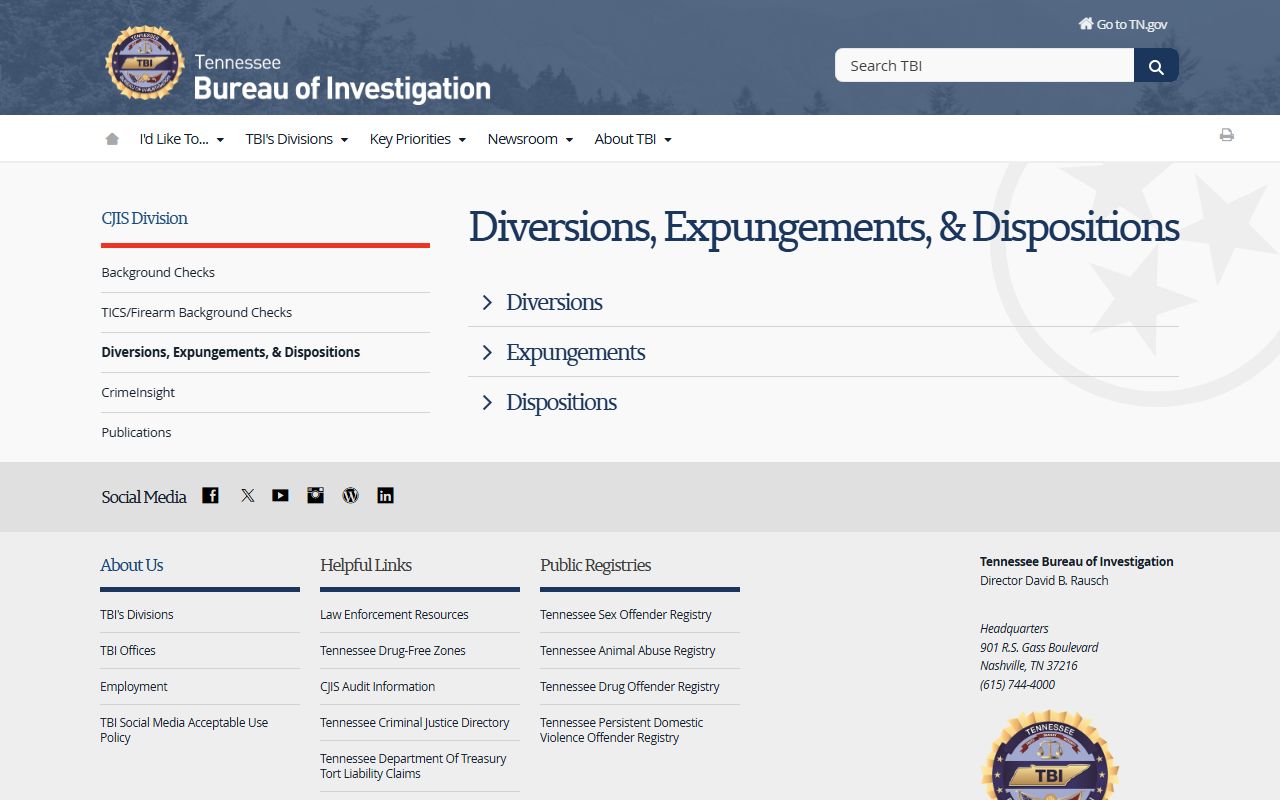
That state step matters because clearing the court charge record may also require processing by agencies outside Fayette County.
Sealed and Expunged Charges
Juvenile charges, sealed cases, adoption-related matters, mental-health information, protected addresses, and medical or financial identifiers are restricted. Expunction removes eligible criminal charges from public access after a qualifying order. Dismissed, nolle prosequi, no true bill, and not-guilty outcomes may qualify at no cost, though costs can matter if the case was dismissed with costs. Some eligible convictions require waiting periods and a statutory fee.
| Point | Sealed | Expunged |
|---|---|---|
| Effect | Restricts access while the record still exists | Removes or destroys the qualifying record as allowed by law |
| Common Reason | Juvenile, sensitive, protected, or court-ordered restriction | Dismissed, acquitted, nolle prosequi, no true bill, diversion, or eligible conviction |
| Public View | Hidden or partly hidden | Not publicly available after processing |
| Proof | Sealing order or legal restriction | Certified expunction order |
The Tennessee expungement information page gives statewide guidance for clearing eligible Fayette County charge records.
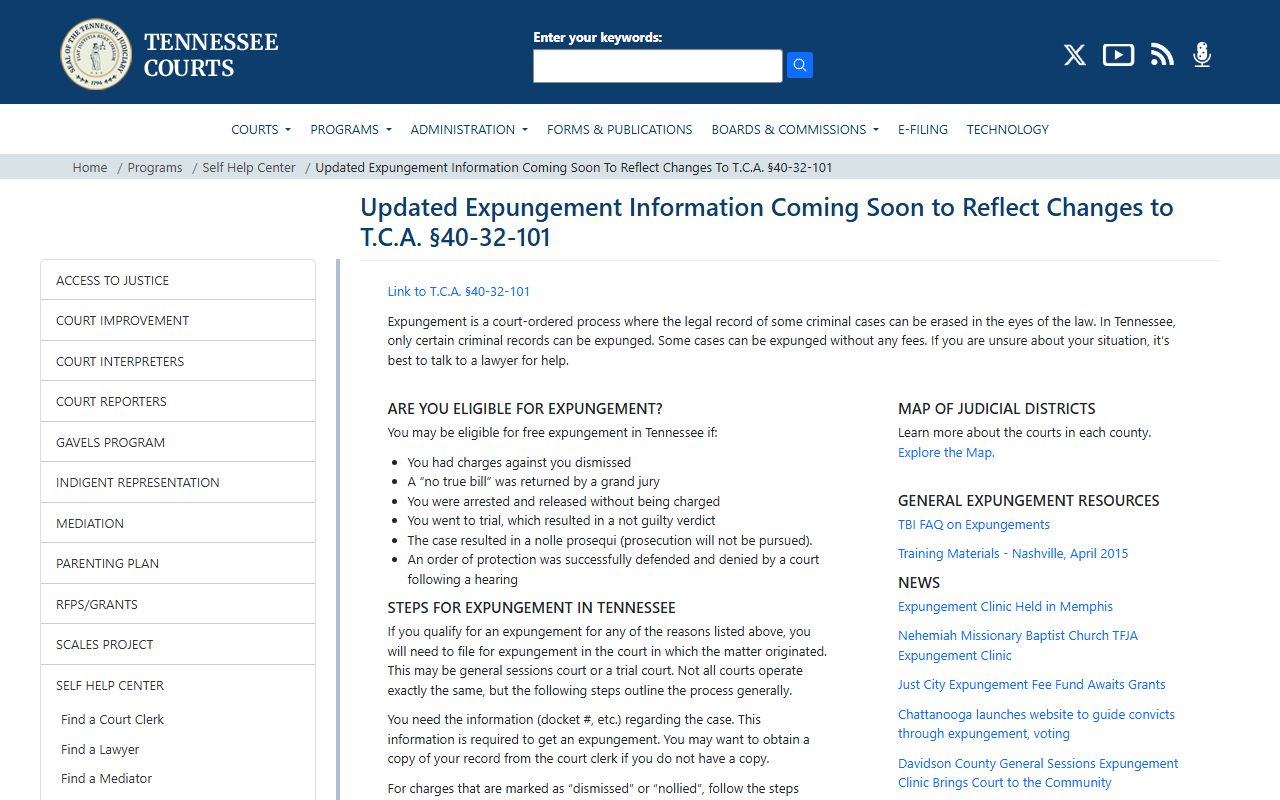
Keep certified copies of expunction orders because public systems and agencies may update on different timelines.
For Fayette County arrest records, expunction questions should start with the court of origin. A sheriff or police record may depend on the court's signed order before it can be removed from public access. If the case moved from General Sessions to Circuit Court, confirm which clerk has the disposition and which court must sign the order.