
What Fayette County Court Dockets Show
A docket is the court's running log for a case. In Fayette County, a docket entry can show the complaint or petition, summons issued, service returned, answer, motion, order, continuance, hearing setting, judgment, garnishment, execution, satisfaction, plea, sentence, or dismissal. It may also show a courtroom, judge, date, and event type. The docket is useful for confirming what happened and what is set next, but it is not the same as the full case record.
Fayette County court dockets are created by the court where the case is pending. Circuit Court handles felony matters, larger civil cases, and appeals from General Sessions. General Sessions handles misdemeanors, preliminary felony hearings, smaller civil claims, evictions, traffic, and orders of protection. Chancery handles equity, divorce, probate, estates, adoptions, name changes, and delinquent-tax suits. City courts keep municipal and city traffic dockets.
The court split matters because docket staff will not always search another court's calendar. A Chancery estate setting is not found through the same counter as a General Sessions misdemeanor date, and a city traffic case from Oakland, Piperton, Rossville, or Somerville may not appear in county traffic records. Matching the citation, summons, or notice to the court name saves time and lowers the risk of missing a setting.
| Docket Source | Typical Docket Matters | Office |
|---|---|---|
| Circuit Court | Felony criminal, civil cases, appeals from General Sessions | Circuit Court Clerk |
| General Sessions | Misdemeanors, prelims, traffic, civil claims, evictions | Circuit Court Clerk |
| Chancery Court | Divorce, probate, equity, name changes, tax suits | Clerk and Master |
| Municipal Courts | City ordinance and city traffic cases | City court clerk |
Find Fayette County Docket Dates
Fayette County does not publish a public online trial-court docket calendar for Circuit, General Sessions, or Chancery cases. To find a hearing date, start with the clerk for the court that owns the case. For Circuit and General Sessions court dockets, call the Circuit Court Clerk at 901-465-5205 or visit 705 Justice Drive. For Chancery, probate, estate, and divorce dockets, call the Clerk and Master at 901-465-5219 or visit the historic courthouse at 16755 Highway 64, Suite 210.
- Identify the court from the citation, summons, complaint, indictment, judgment, or prior notice.
- Gather the case number if available, plus party names and an approximate filing or hearing date.
- Call or visit the correct clerk, and ask for the next setting, docket entry history, or copy options.
- If the case is municipal, contact the town clerk rather than the county clerk.
- If the case is on appeal, search the Tennessee Public Case History appellate system.
The Tennessee Public Case History portal is the statewide docket search for Tennessee appellate courts, not Fayette County trial-court dockets.
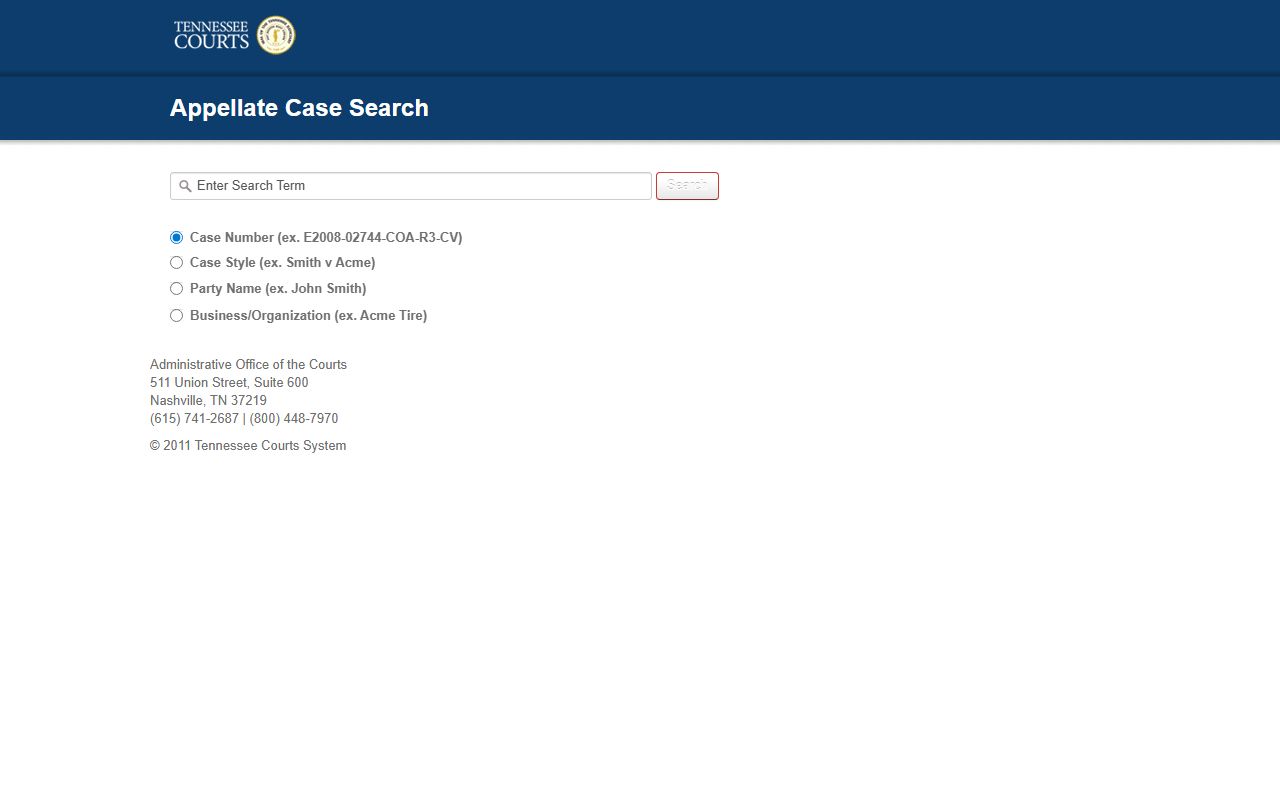
Use it only when a Fayette County case has reached the Court of Appeals, Court of Criminal Appeals, or Tennessee Supreme Court.
Reading Fayette County Docket Entries
Fayette County docket entries are brief by design. A single line may use abbreviations such as MOT for motion, ORD for order, JDG for judgment, CONT for continuance, and DISP for disposition. Criminal docket lines may show arraignment, bond, plea, sentencing, probation, or expunction activity. Civil docket lines may show service, answer, motion, hearing, judgment, garnishment, levy, lien, satisfaction, or appeal activity.
| Field | What It Shows |
|---|---|
| Entry Date | The date the clerk recorded a filing, setting, order, payment, or event. |
| Event Type | The type of docket action, such as motion, order, judgment, plea, or continuance. |
| Party or Filer | The person, attorney, agency, or party associated with the filing or event. |
| Judge or Division | The assigned judge, courtroom, court part, or hearing officer when shown. |
| Hearing Date | The next or past court setting, including arraignment, motion, trial, or sentencing. |
| Disposition | The outcome, such as dismissed, judgment entered, guilty, acquitted, or nolle prosequi. |
A Fayette County docket entry may not include the full document text. If the docket shows an order or judgment, ask the clerk for a copy of that specific paper.
Names on a docket should also be read in context. A plaintiff or petitioner starts a civil or equity case. A defendant or respondent answers it. In a criminal docket, the State of Tennessee is the prosecuting party, and the defendant is the person charged. Sureties, garnishees, intervenors, probation officers, and law-enforcement agencies can also appear in docket activity without being the main parties to the case.
Fayette County Docket Number Clues
Tennessee does not force every county clerk to use one case-number format. Fayette County court dockets may use year, sequence, court, and case-type codes. Common Tennessee references include CV for civil, CR for criminal, CH for Chancery, GS for General Sessions, DR or DV for domestic relations, JV for juvenile, OP for order of protection, PR for probate, DET or FED for detainer, and TR for traffic. Confirm the exact Fayette format with the clerk because local masks can differ.
- Docket
- The chronological log of filings, orders, hearings, and results in a case.
- Disposition
- The final result of a charge, claim, or case.
- Continuance
- A postponement of a hearing or trial to a later date.
- De novo appeal
- A fresh trial in Circuit Court after certain lower-court decisions.
For a name-based request, give the clerk a date range. A common name with no case number can require extra search time.
Hearing fields are often the most urgent docket details. Ask for the hearing type, date, time, judge, courtroom, and whether the date is a trial, arraignment, motion, status conference, sentencing, or review. If a setting was continued, ask for the new date and the entry that granted the continuance. A missed date can lead to a capias, bench warrant, bond forfeiture, default judgment, or driver-license issue depending on the case type.
Fayette County General Sessions Dockets
General Sessions Court is the highest-volume docket source for many Fayette County residents. It handles misdemeanors, preliminary felony hearings, traffic citations, civil claims up to $25,000, small claims, eviction and detainer matters, and orders of protection. The same clerk office at 705 Justice Drive handles Circuit and General Sessions docket information. The judge for Fayette County General Sessions and Juvenile Court is David L. Douglas.
Traffic docket access has a local detail: county traffic citations do not have a Fayette County online payment or lookup portal. The research notes a reset line, 901-465-7301, with resets by the Friday before a Tuesday court date. The citation itself controls the court, date, time, and place. City citations may go to a municipal court instead.
The Tennessee General Sessions Court overview explains the limited-jurisdiction role that shapes Fayette County court dockets.
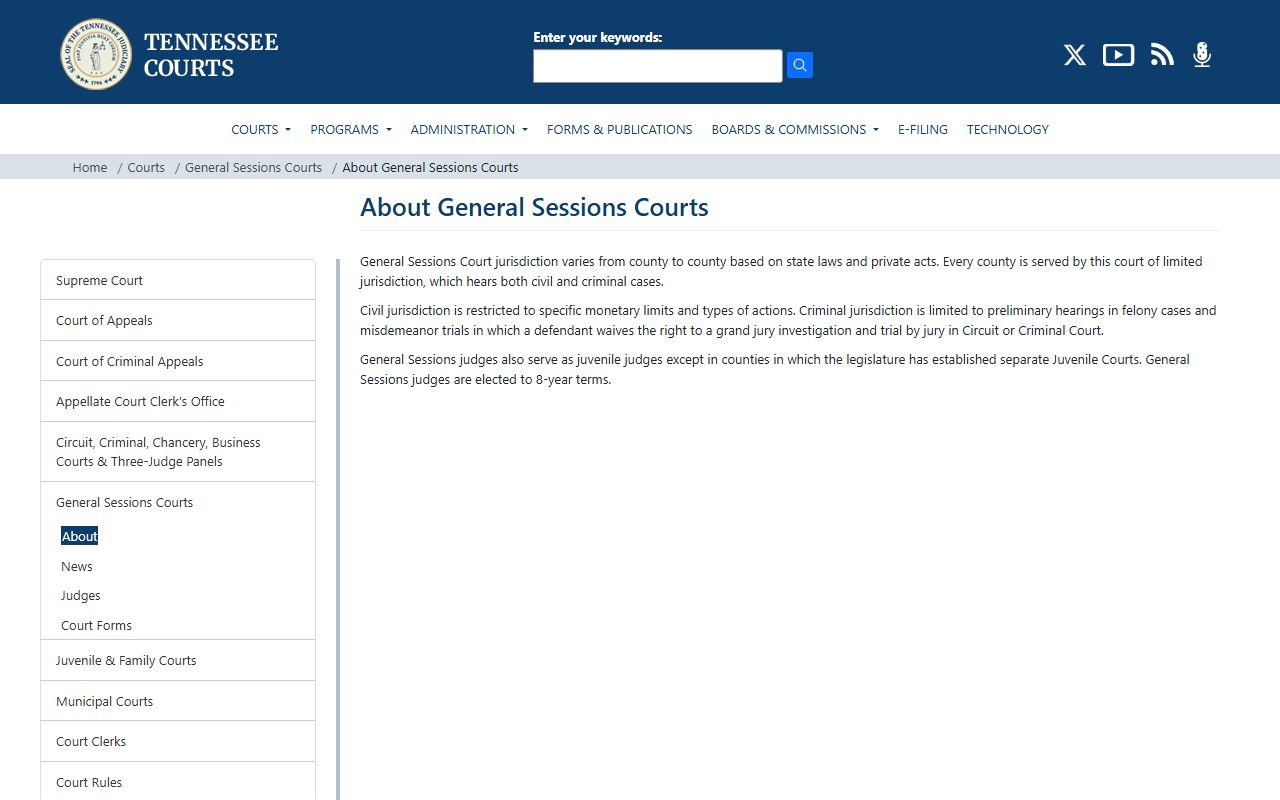
That statewide overview helps explain why many misdemeanor, traffic, eviction, and small civil events appear first on General Sessions dockets.
General Sessions docket results can later affect Circuit Court records. A felony that is bound over moves toward grand-jury review and Circuit Court filing. A civil judgment appealed from General Sessions goes to Circuit Court for a fresh trial. A dismissed traffic or misdemeanor matter may still require expunction steps before the public record is cleared.
Fayette Dockets vs Case Records
A Fayette County court docket is an index of case events. A full case record includes the docket plus the documents behind the entries. For example, a docket might show that a motion was filed, an order was entered, or a judgment was recorded. The full case file may contain the motion, the signed order, exhibits, affidavits, and the final judgment. Certified copies usually come from the full file, not from the docket line alone.
| Feature | Docket | Full Case Record |
|---|---|---|
| Format | Short event log | Docket plus pleadings, orders, exhibits, and judgments |
| Best Use | Track status and hearing dates | Review claims, charges, rulings, and certified documents |
| Access | Clerk lookup by court, name, date, or case number | Clerk inspection or copy request |
| Limits | May use abbreviations and omit document text | May require redactions, copy fees, or restricted access review |
When the docket does not answer the question, ask for the underlying filing by entry date and title. This works better than asking for the entire file when only one order or judgment is needed.
Copy requests should be specific. Instead of asking for every paper in an old file, request the final judgment, sentencing order, divorce decree, probate order, dismissal, or satisfaction of judgment by docket date. That gives the clerk a clearer target and helps the requester avoid paying for pages that are not needed.
Restricted Fayette County Dockets
Most civil, criminal, traffic, probate, and judgment dockets are public unless a rule or order restricts them. Tennessee Supreme Court Rule 34 and the Tennessee Public Records Act govern public access. Juvenile dockets are restricted by Tennessee juvenile-confidentiality statutes. Adoption records are sealed. Mental-health commitment proceedings are confidential. Expunged criminal entries are removed from public view, and sealed records may remain visible only to the parties, counsel, agencies, or by court order.
Even when a Fayette County docket is public, some fields can be redacted. Protected addresses, minors' names, Social Security numbers, account numbers, medical data, and financial identifiers may be withheld. A public docket entry can also refer to a sealed filing without making the sealed document available.
Note: A docket confirms case activity, but certified proof usually requires a copy of the actual judgment or order.