
Fayette County Criminal Court Records
Fayette County criminal court records are kept by the Circuit Court Clerk, Ed Pulliam, for criminal cases in General Sessions and Circuit Court. Fayette County has no separate Criminal Court division in the 25th Judicial District. Felony criminal jurisdiction is exercised by Circuit Court judges J. Weber McCraw and A. Blake Neill. Misdemeanors and preliminary felony hearings begin in General Sessions before Judge David L. Douglas. The same clerk office at 705 Justice Drive supports both levels for criminal case records.
The criminal case file is different from the jail booking record. The jail roster may show a person in custody and a charge block, while the court file shows what the prosecutor filed, how the defendant pleaded, what motions were heard, and how the case ended. For charge wording and status after arrest, see the Fayette County arrest records and court charges page.
Fayette County criminal court records also differ from a statewide criminal-history check. The court file is case-specific and comes from the clerk. A background check may compile reported convictions or agency data, but it may not show the full docket, motions, bond history, dismissed counts, or certified judgment. For legal proof, the clerk's certified criminal judgment is the stronger record.
| Court | Criminal Role | Records Office |
|---|---|---|
| General Sessions Court | Misdemeanors, arraignments, preliminary felony hearings, traffic, bonds | Circuit Court Clerk |
| Circuit Court (25th Judicial District) | Felony indictments, trials, pleas, sentencing, appeals from Sessions | Circuit Court Clerk |
| Municipal Courts | City ordinance and city traffic matters, with appeal to Circuit | City court clerk |
| Juvenile Court | Delinquency and youth matters, restricted by law | Juvenile court office |
Search Fayette County Criminal Court Records
Fayette County does not publish an online public trial-court criminal case search. The search process uses the Circuit Court Clerk, who can help confirm whether the criminal case exists, quote copy fees, and explain how to request the docket, judgment, sentence, or certified copy. Mail requests go to P.O. Box 670, Somerville, TN 38068. Phone requests start at 901-465-5205.
- Decide whether the matter is a misdemeanor, preliminary felony, felony indictment, traffic crime, or municipal offense.
- Contact the Circuit Court Clerk with the defendant name, case number if known, date range, and requested document.
- Ask whether the criminal case is in General Sessions, Circuit Court, or a city court.
- Request the docket, judgment, sentence, plea paperwork, or certified copies from the court of record.
- For appellate criminal cases, search Tennessee Public Case History by party name, style, or appellate case number.
The 25th Judicial District Attorney General page identifies the district prosecutor's office that handles Fayette County criminal prosecutions.
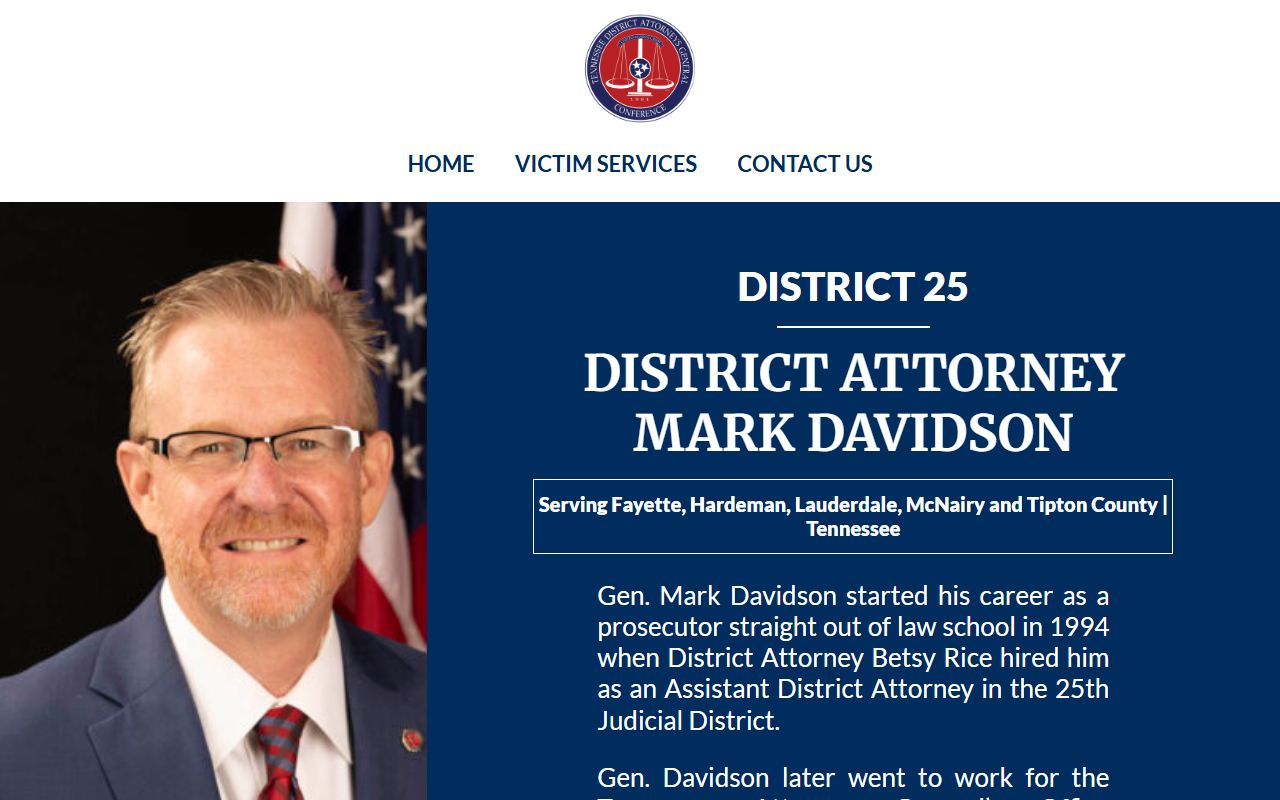
The DA's role matters because criminal court records show charges prosecuted by the State of Tennessee, not private civil claims.
Fayette County Criminal Case Flow
Most Fayette County criminal court records begin with an arrest, citation, warrant, affidavit of complaint, indictment, or presentment. Misdemeanors can be resolved in General Sessions. Felonies normally start with an initial appearance and preliminary hearing in General Sessions, then move to the Circuit Court grand jury if bound over. Once an indictment or other charging instrument is filed, the Circuit Court record tracks arraignment, motions, plea negotiations, trial settings, verdicts, sentences, costs, and post-judgment actions.
Case flow: Charges Filed › Arraignment › Pretrial and Motions › Plea or Trial › Disposition › Sentencing
| Stage | What the Criminal Record Shows |
|---|---|
| Charges Filed | Affidavit of complaint, indictment, presentment, or other charging paper and statute references. |
| Arraignment | Advice of charge, counsel status, plea, bond, and next setting. |
| Pretrial and Motions | Discovery, suppression motions, continuances, competency issues, or plea negotiations. |
| Plea or Trial | Guilty plea, nolo contendere plea, bench trial, jury trial, verdict, or dismissal. |
| Disposition and Sentencing | Final judgment, sentence, probation, restitution, fines, costs, jail credit, or expunction order. |
What Fayette County Criminal Records Show
A Fayette County criminal court record may include a case number, defendant information, attorney of record, charging instrument, bond, warrant or capias activity, docket events, motions, orders, pleas, trial result, disposition, sentence, costs, restitution, probation terms, and expunction filings. Court records can show charges that did not become convictions, so the disposition field is essential. A dismissed, retired, acquitted, or nolle prosequi charge should not be read as a conviction.
| Field | What It Shows |
|---|---|
| Case Number | Local criminal number, often with a year, sequence, and court or type code. |
| Defendant | Name, role, attorney, and sometimes limited identifying details after redaction. |
| Charges | Offense labels, statute references, severity, amended counts, dismissed counts, and active counts. |
| Bond | Amount, type, surety, forfeiture status, or release condition when entered. |
| Docket Entries | Arraignments, motions, orders, continuances, settings, pleas, and hearings. |
| Disposition | Guilty, not guilty, dismissed, nolle prosequi, acquitted, no true bill, or other outcome. |
| Sentence | Jail, prison, probation, fines, costs, restitution, and court-ordered conditions. |
The 25th Judicial District victim-services page directs victims to the local Criminal or Circuit Court Clerk for hearing dates.
That route is useful when a victim needs a hearing date tied to a pending Fayette County criminal case.
Fayette Charges vs Convictions
A charge is an accusation filed in court. A conviction is a final result after a guilty plea, verdict, or other judgment of guilt. Fayette County criminal court records can contain many charge paths: amended, reduced, dismissed, retired, nolle prosequi, no true bill, acquitted, or guilty. One arrest can create several counts, and each count can end differently.
| Point | Charge | Conviction |
|---|---|---|
| Meaning | An allegation brought by complaint, information, indictment, or presentment | A court outcome that the defendant is guilty |
| Timing | Appears near the start of the criminal case | Appears at plea, verdict, or judgment |
| Record Risk | May be public even if later dismissed | Often remains unless eligible for expunction or other relief |
| How to Confirm | Read each count and current status | Read the judgment, disposition, and sentence |
District Attorney and Defense Records
The District Attorney General for the 25th Judicial District is Mark E. Davidson. The Fayette County criminal office is at 16814 Highway 64, Somerville, with phone 901-465-7351. The DA prosecutes state criminal cases in Fayette County and the other district counties: Hardeman, Lauderdale, McNairy, and Tipton. Victim services, impact-statement materials, and criminal-injury-compensation information are handled through the DA's victim-services program.
The District Public Defender is Bo Burk. The Somerville Public Defender office uses P.O. Box 700, 16600 Highway 64, Somerville, with phone 901-465-7330. Indigency is decided by the court through an affidavit at appearance or arraignment. Defense counsel filings, appointment orders, waiver forms, and motions may appear in the criminal court record, but attorney work product and privileged communications are not public court records.
The District 25 Public Defender profile identifies the public defense office that serves Fayette County criminal cases.

Public defender details help explain why some docket entries refer to appointed counsel, indigency, or substitution of counsel.
Access and Expunction Rules
Fayette County criminal court records are public unless a statute, rule, expunction, seal, or court order restricts them. Tennessee Public Records Act access and Tennessee Supreme Court Rule 34 apply to court records, but juvenile matters, sealed records, medical or mental-health information, protected addresses, Social Security numbers, minors' data, and financial-account information are restricted or redacted.
Expunction is governed by Tennessee law. Dismissed, nolle prosequied, no-true-bill, and not-guilty charges may be eligible at no cost, though court costs can still matter when a case was dismissed with costs. Eligible convictions have stricter limits, waiting periods, and fees. The criminal court clerk where the case began handles the filing and forwards the signed order to agencies such as the TBI.
| Point | Sealed | Expunged |
|---|---|---|
| Record Status | Still exists but public access is limited | Removed or destroyed as allowed by law |
| Who May See It | Parties, counsel, agencies, or people allowed by court order | Very limited access after the order is processed |
| Common Use | Protects sensitive cases or data | Clears eligible criminal charges or convictions |
| Proof | Court order or docket restriction | Signed expunction order |
The Tennessee court system's expungement steps outline the process used for eligible Fayette County criminal court records.
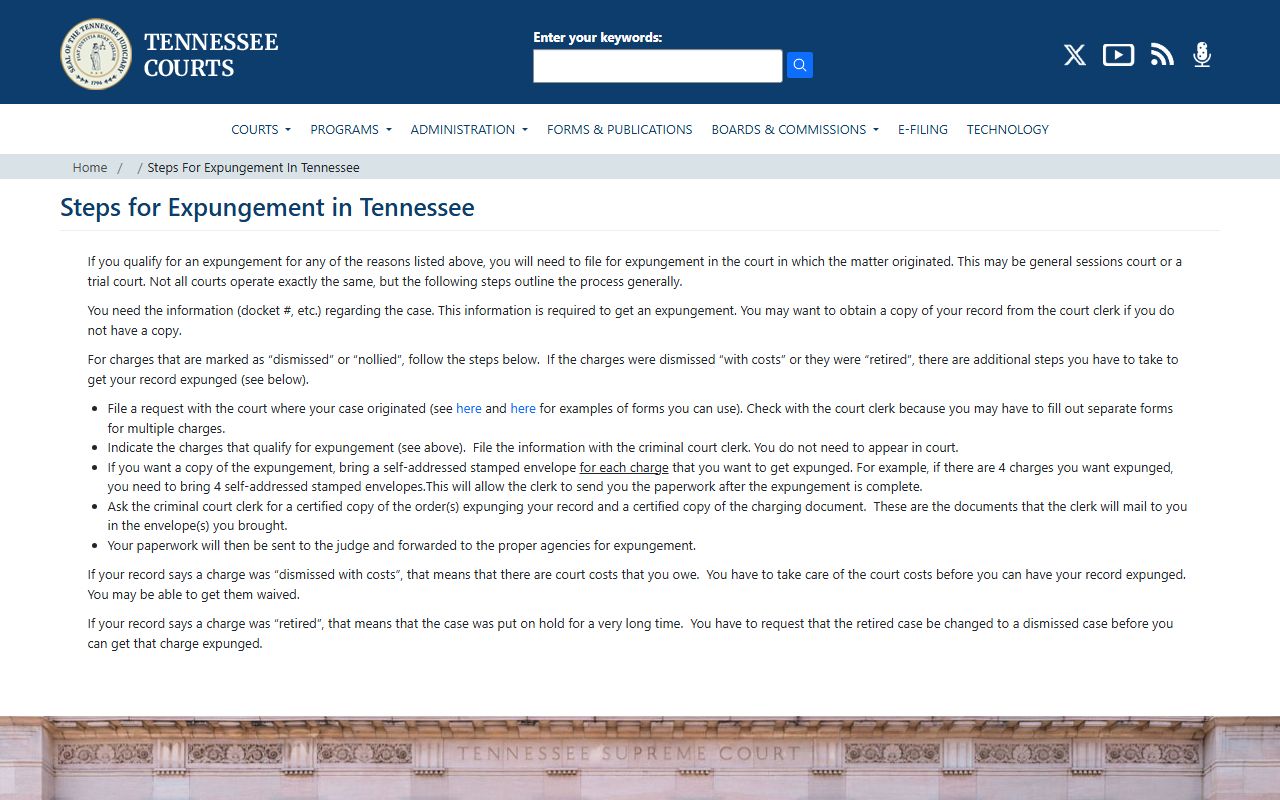
Those steps are especially important when a criminal case ended in dismissal, acquittal, nolle prosequi, or no true bill.
Federal Criminal Records Near Fayette
Some criminal matters tied to Fayette County can be federal rather than state cases. Fayette County is in the Western Division of the U.S. District Court for the Western District of Tennessee, with federal court held in Memphis. Federal criminal records are not kept by the Fayette County Circuit Court Clerk. They are accessed through federal systems such as PACER, the federal district court, or federal agencies.
Federal detainers may still appear in local custody records. The research notes that the U.S. Marshals Service appears as a holding agency in the Fayette inmate roster, which means federal holds can be processed through the Fayette County Detention Center even when the underlying case is federal.
When a local and federal matter touch the same person, search both systems separately. A Fayette County case can show state charges and bond, while a federal docket can show indictment, detention, plea, and sentence in the Western District. One record does not replace the other.
The U.S. Attorney for the Western District of Tennessee handles federal prosecutions that are separate from Fayette County criminal court records.
Check the filing court before assuming that a custody hold or prosecution belongs in a Fayette County trial-court file.