
Where Fayette County Court Records Live
Fayette County court records are divided by court and clerk. The Circuit Court Clerk, Ed Pulliam, keeps Circuit Court, General Sessions, criminal, misdemeanor, traffic, judgment, warrant, and order of protection files at the Bill G. Kelley Criminal Justice Complex, 705 Justice Drive, Somerville, Tennessee. That office is also the first call for most active trial records because the Circuit Court Clerk serves the Circuit and General Sessions courts.
Chancery Court records use a different office. The Clerk and Master, Amy Anderson, keeps Chancery files, including probate, open estates, divorce, adoptions, name changes, delinquent tax matters, and workers' compensation records at 16755 Highway 64, Suite 210. Marriage licenses and other non-court records are with the County Clerk, Shana N. Burch, at 1 Court Square, Room 101.
| Record Type | Office to Contact | Main Contact |
|---|---|---|
| Circuit civil, felony criminal, General Sessions, traffic, judgments | Circuit Court Clerk, 705 Justice Drive | 901-465-5205 |
| Probate, estates, divorce, adoptions, name changes | Clerk and Master, 16755 Highway 64, Suite 210 | 901-465-5219 |
| Marriage licenses and county clerk services | County Clerk, 1 Court Square, Room 101 | 901-465-5213 |
| City ordinance and municipal traffic cases | Municipal court clerk for the town that issued the citation | Varies by city |
The Tennessee Supreme Court Rule 34 public-access page shows the statewide court-record access rule used for Fayette County court records.
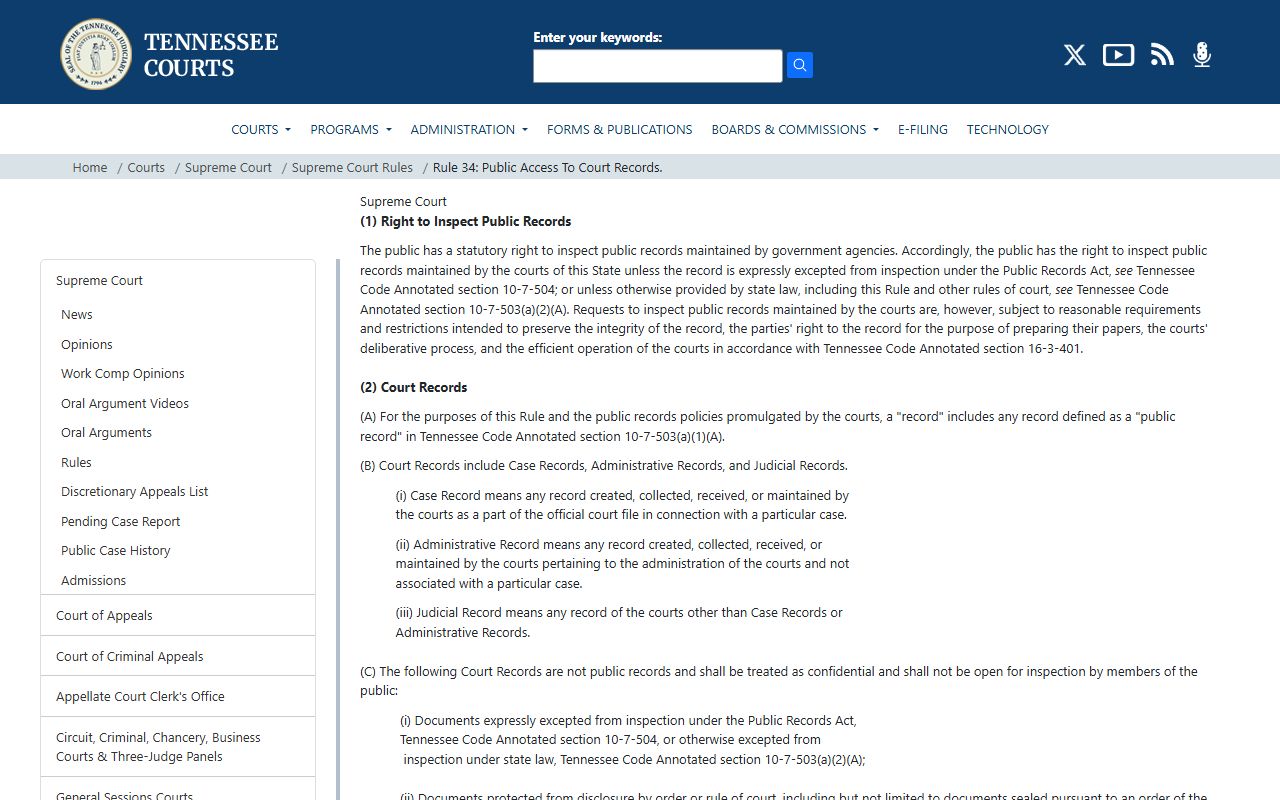
That statewide rule matters because Fayette County has no public trial case portal to replace clerk review and local request procedures.
No Fayette County Court Records Portal
Tennessee does not provide one public statewide trial-court search for county trial records, and Fayette County does not publish an online public case-search portal for Circuit, General Sessions, Chancery, probate, or juvenile trial files. The Tennessee Public Case History system is useful, but it is an appellate case search for the Tennessee Supreme Court, Court of Appeals, and Court of Criminal Appeals. It does not show Fayette County trial-court filings.
That means the correct search path is a fallback chain: identify the court, contact the clerk, ask by party name or case number, then request inspection or copies. The Tennessee courts directory can help confirm court and clerk contacts, but it is not a database of Fayette County court records.
| Field Label | Type | Required | Notes |
|---|---|---|---|
| Case Number | Text | No | Applies to appellate cases, such as E2008-02744-COA-R3-CV |
| Case Style | Text | No | Searches appellate case captions |
| Party Name | Text | No | Can search a person named in an appellate matter |
| Business or Organization | Text | No | Can search entities in appellate records |
The Tennessee court directory is a better source for confirming Fayette County court contacts than for finding case files.
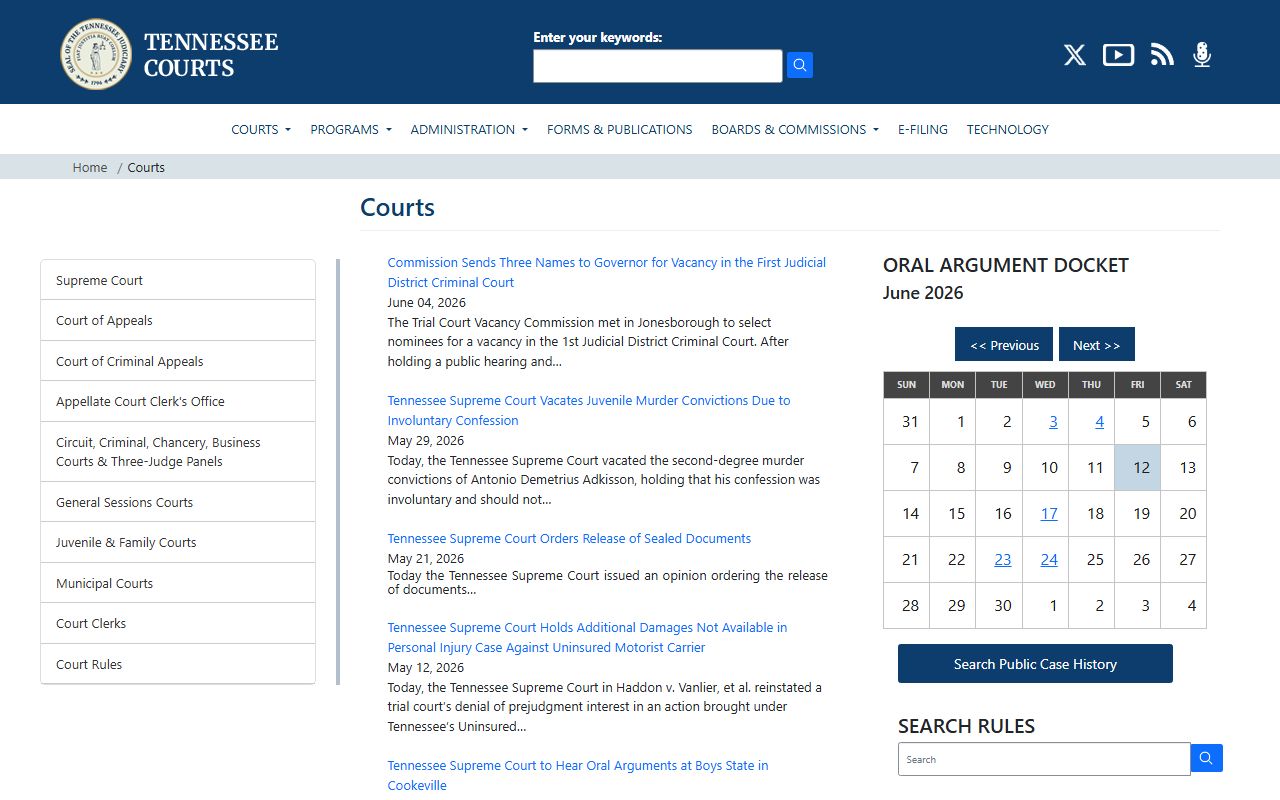
Use directory information to confirm the proper office before sending payment, copy requests, or sensitive case details.
Request Fayette County Court Records
Because Fayette County court records are not posted in a trial-case portal, most public requests use the clerk counter, mail, phone, or a Tennessee Public Records Act request. A strong request gives the clerk enough detail to locate the file without making assumptions about the court or case type. Include the party names, approximate filing year, court, case number if known, record type, requested copy type, return address, and phone number.
- Identify the court that made the Fayette County court record: Circuit, General Sessions, Chancery, Juvenile, or a city court.
- Contact the correct clerk before mailing money or forms, especially when the record could be a Chancery, probate, or municipal file.
- Ask whether the clerk can confirm the case number by phone from party name and date range.
- Request inspection, plain copies, or certified copies, and ask for the current copy fee before paying.
- For a formal public-records request, submit the request to the clerk who serves as records custodian.
For older Fayette County court records, the Tennessee State Library and Archives court-record guidance is useful because TSLA directs researchers to local clerks and historical holdings rather than a single statewide trial database.
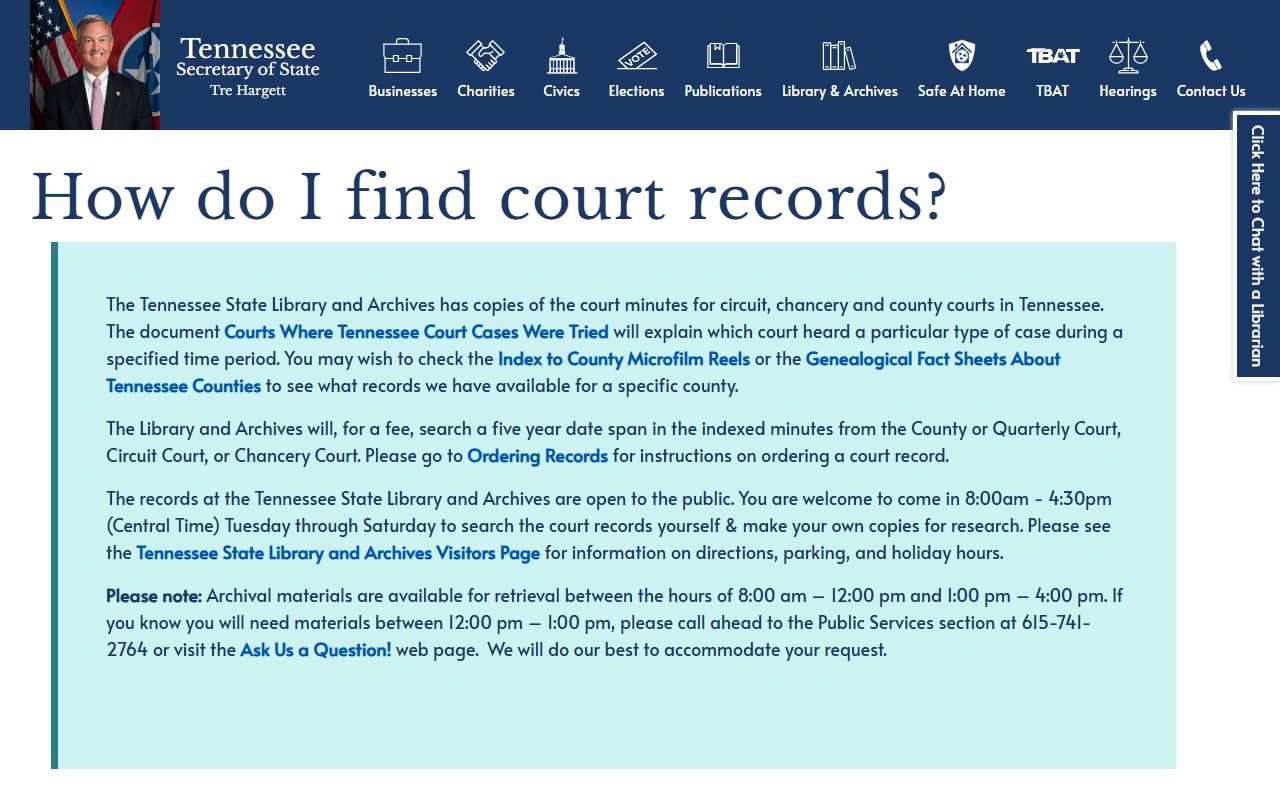
TSLA guidance is most useful when a Fayette County court record is old, genealogical, or no longer housed in the active case area.
Types of Fayette County Court Records
Fayette County court records include civil, criminal, family, probate, traffic, juvenile, judgment, and appellate-related materials. Circuit Court handles felony criminal matters, larger civil suits, and appeals from General Sessions. General Sessions handles misdemeanors, preliminary felony hearings, civil claims up to $25,000, evictions, traffic, and orders of protection. Chancery handles equity matters, divorce, probate, estates, adoptions, name changes, workers' compensation, and delinquent tax suits.
- Civil court records may include complaints, answers, motions, service returns, judgments, garnishments, and satisfactions.
- Criminal court records may include charging instruments, bonds, pleas, hearing entries, judgments, sentences, and expunction filings.
- Probate records may include wills, letters testamentary, inventories, accountings, guardianship papers, and estate orders.
- Traffic records may include citations, pleas, fines, costs, dispositions, failure-to-appear entries, and payment status.
- Juvenile records are restricted by Tennessee law and are not searched like ordinary public case files.
The Tennessee Office of Vital Records is a separate source for certified statewide vital records, not a replacement for Fayette County court records kept by the clerks.
That distinction matters when a divorce decree, marriage certificate, or court file is needed for a legal purpose.
What Fayette County Court Records Show
A Fayette County court record usually combines an index, a docket, and documents. The index identifies the case. The docket is the chronological event log. The file contains pleadings, orders, notices, judgments, exhibits, affidavits, and other papers the clerk may release if no law restricts them. Tennessee case-number formats are not uniform, but common type codes include CV, CR, CH, GS, DR, JV, OP, PR, DET, FED, and TR.
| Field | What It Shows |
|---|---|
| Case Number | Local year, sequence, and court or case-type code assigned by the clerk. |
| Parties | Plaintiff, petitioner, defendant, respondent, attorneys, the State of Tennessee, or sureties. |
| Filing Date | When the case began and when key papers entered the file. |
| Docket Entries | Chronological filings, orders, continuances, hearing settings, judgments, and post-judgment actions. |
| Disposition | Final result, such as judgment, dismissal, guilty plea, acquittal, nolle prosequi, or closed estate. |
| Financial Fields | Fines, court costs, litigation taxes, restitution, bond, judgment amounts, and payment status. |
The Tennessee General Assembly statute portal is the official place to verify current Tennessee Code sections that affect Fayette County court records.

Use current statutes when a case turns on confidentiality, expunction, court fees, or public-records access.
Fayette County Court Records Access Rules
Tennessee public access starts with the Tennessee Public Records Act FAQ and Rule 34 for court records. Tennessee citizens may inspect public records, and a custodian must promptly produce records or, within seven business days when immediate access is not practical, provide the records, deny the request in writing, or give a written time estimate. Inspection is free. Copies may be charged at the actual copying and labor cost allowed under state guidance.
A TPRA request for Fayette County court records must go to the right records custodian. Circuit and General Sessions requests go to the Circuit Court Clerk. Chancery, probate, and divorce requests go to the Clerk and Master. County Clerk records go to the County Clerk. A request should not be sent to the sheriff unless it seeks sheriff records, such as an arrest report rather than a court file.
Note: Fayette County does not post a dedicated court-record TPRA form online, so confirm the clerk's intake method before mailing a formal request.
The Office of Open Records Counsel FAQ explains the seven-business-day response rule used by Fayette County records custodians.
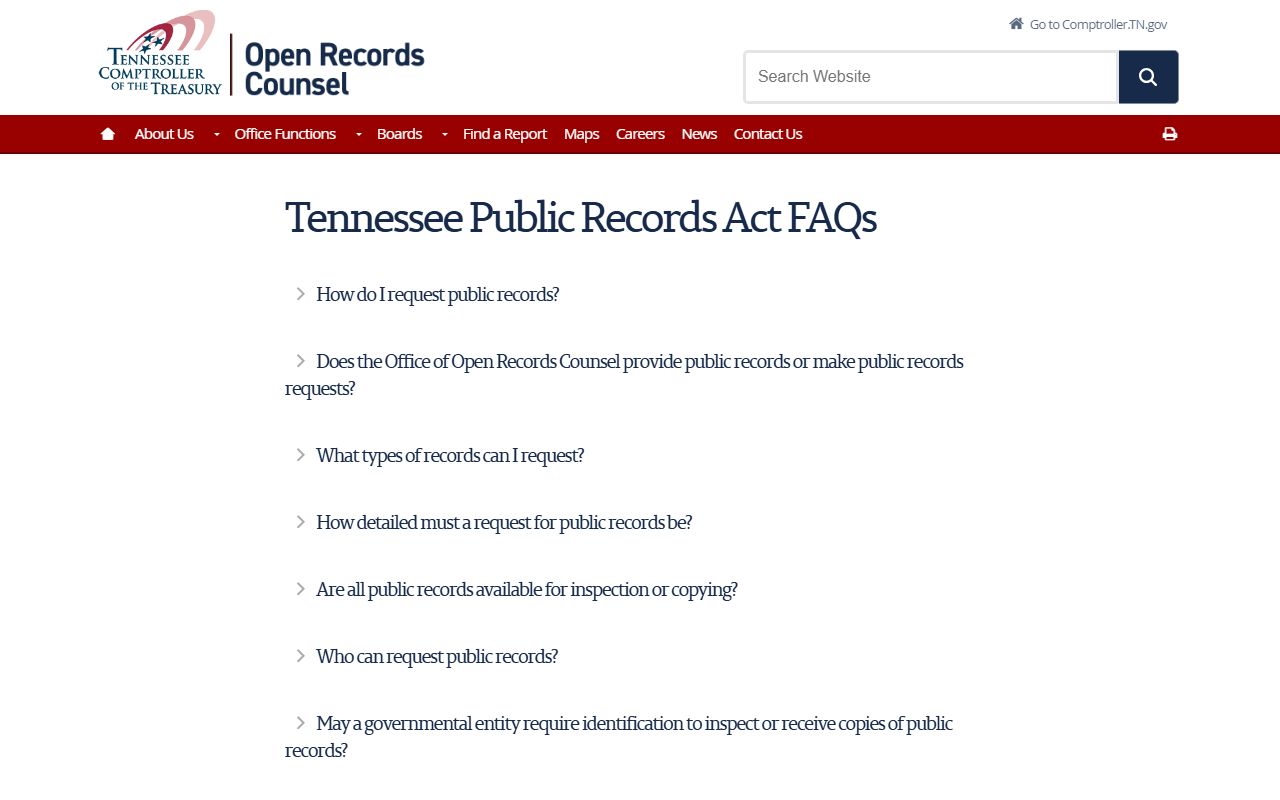
Those rules help separate a public court-record request from a background check or a sheriff investigative-record request.
Fees and Restricted Fayette County Court Records
Fayette County has not posted a complete court copy-fee schedule online. Statewide rules provide some anchors. A certified copy authentication and seal is $5 under Tennessee court-fee statutes. Estate filing, marriage-license, and other fees may be set by separate statutes or local schedules. Call the clerk before sending payment because the fee can depend on plain copies, certified copies, search time, mailing, or the number of pages.
| Item | Known Fee or Rule |
|---|---|
| Certified copy authentication and seal | $5 statewide certification fee |
| Plain copy rates | Set locally under Tennessee public-records cost rules |
| Inspection | Free when allowed by the Tennessee Public Records Act |
| Local search or copy totals | Not posted on Fayette County court pages, confirm by phone |
Some Fayette County court records are not public. Juvenile court records and juvenile law-enforcement records are confidential under Tennessee law. Adoption records are sealed. Mental-health commitment records are restricted. Even public court files may have redactions for Social Security numbers, financial-account numbers, minors' names, partial birth dates, protected addresses, and sealed or expunged matters. Expunged criminal records are removed from public access under Tennessee expunction law.
The practical rule is simple: ask for the public part of the file first, then let the clerk identify any redaction, seal, or court order that blocks release. For Fayette County court records involving children, adoption, mental-health treatment, or expunction, the absence of a public result does not prove that no case ever existed. It may mean the record is legally withheld from ordinary public inspection.